
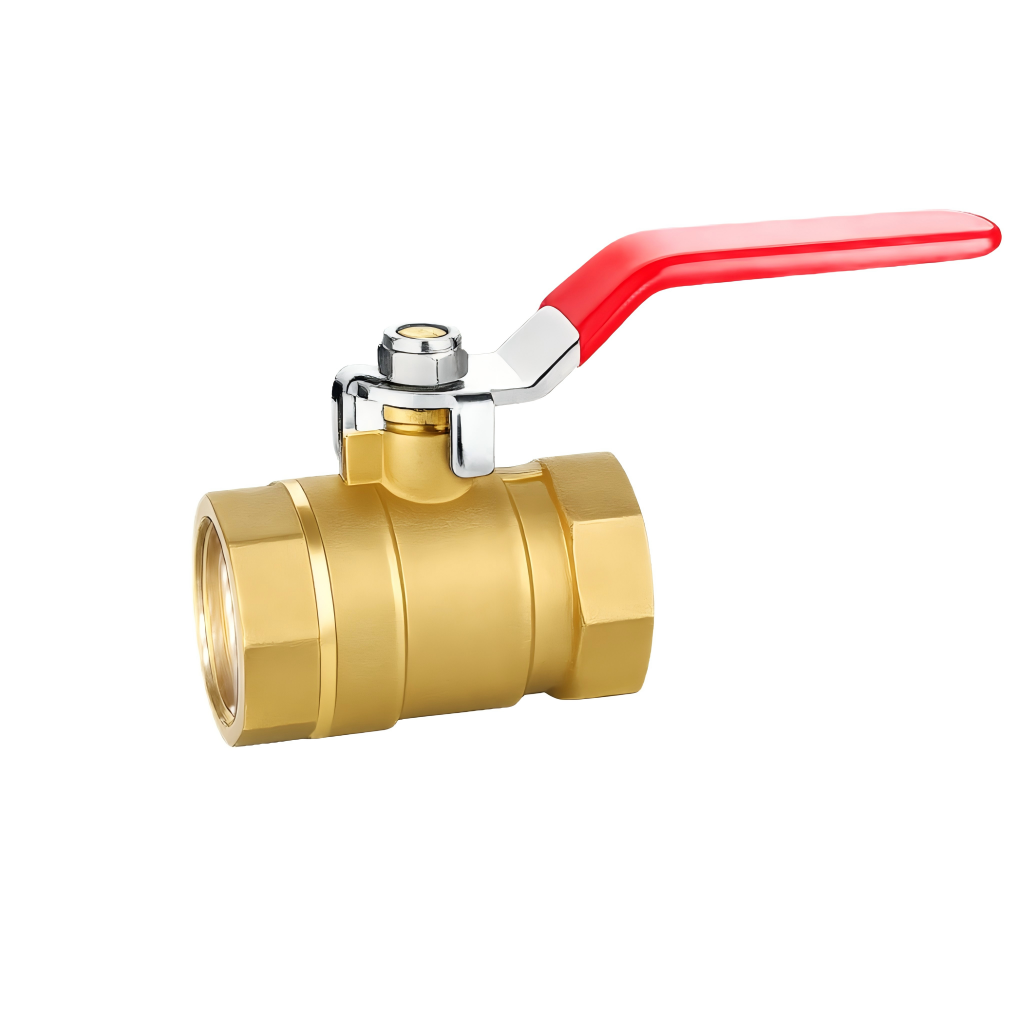
Brass ball valve with Female x Female threaded ends and red lever handle for water supply, plumbing, HVAC, irrigation and general pipeline shut-off applications. Available in different sizes with BSP, BSPT or NPT thread options, OEM logo marking, customized handle colors and private label packaging.
Brass Ball Valve with Female Threaded Ends and Red Lever Handle
SUNRICH FLOW supplies brass ball valves with Female x Female threaded ends and red lever handles for water supply, plumbing, HVAC, irrigation and general pipeline shut-off applications.
This model features a natural brass valve body, internal threaded connections on both ends and a red lever handle for convenient quarter-turn operation. Its straight-through valve structure provides quick opening and closing for compatible water and non-corrosive fluid pipelines.
This brass ball valve is suitable for importers, wholesalers, plumbing distributors, hardware stores, contractors and OEM brand customers looking for reliable brass valves from China. Valve sizes, thread standards, pressure ratings, material grades, handle colors, body markings and packaging can be customized according to customer requirements.
Key Features
• Brass valve body for plumbing and water supply applications
• Female x Female threaded ends for pipeline installation
• Red lever handle for convenient quarter-turn operation
• Natural brass surface finish
• Quick open and close ball valve structure
• Suitable for water supply, plumbing, HVAC and irrigation systems
• BSP, BSPT and NPT thread options available
• Different valve sizes and body weight options can be supplied
• OEM logo, handle printing and packaging can be customized
• Factory-direct supply for importers and distributors
Technical Specifications
Product Name: Brass Ball Valve with Female Threaded Ends and Red Lever Handle
Valve Type: Ball valve
Body Material: Brass
Surface Finish: Natural brass
Connection Type: Female x Female threaded ends
Thread Standard: BSP, BSPT or NPT available
Handle Type: Red lever handle
Port Type: Subject to final product specification
Available Sizes: Subject to final confirmation
Working Pressure: Subject to final product specification
Working Temperature: Subject to final product specification
Working Medium: Water and compatible non-corrosive fluids
Application: Water supply, plumbing, HVAC, irrigation and general pipeline shut-off
OEM Service: Logo, handle color, product labels and customized packaging available
Packing: Neutral box, color box, export carton or customized packaging
Female x Female Threaded Connection
Both ends of this brass ball valve have internal threaded connections. This configuration is commonly used in residential plumbing, commercial water supply and general threaded pipeline systems.
Available thread standards include:
• BSP
• BSPT
• NPT
Buyers should confirm the required thread standard before quotation. BSP threads are commonly requested in Brazil, Europe and many international plumbing markets, while NPT threads are frequently required in Mexico, Colombia, the United States and other American markets.
Red Lever Handle
The red lever handle provides clear valve-position indication and convenient quarter-turn operation.
When the handle is parallel to the pipeline, the valve is normally open. When the handle is perpendicular to the pipeline, the valve is normally closed.
Compared with a butterfly handle, the long lever handle generally provides easier operation where sufficient installation clearance is available. Red, blue, yellow and customized handle colors can be supplied for OEM orders.
Applications
This brass ball valve is commonly used for:
• Residential water supply systems
• Commercial plumbing systems
• HVAC pipelines
• Irrigation systems
• Pump and equipment connections
• Building service systems
• General water pipeline shut-off
• Hardware and plumbing distribution
• Contractor and project installations
Material and Product Options
Different specifications can be supplied according to the destination market and customer requirements, including:
• Natural brass or nickel plated finish
• Different brass material grades
• Different valve body weights
• Full-port or standard-port structures
• Red, blue or customized handle colors
• BSP, BSPT or NPT threads
• Customer logo marking
• Customized retail and export packaging
The exact brass material, valve weight, pressure rating and port type should be confirmed before quotation.
OEM and Private Label Service
SUNRICH FLOW supports OEM and private-label services for brass ball valves, including:
• Valve body logo marking
• Customized handle printing
• Handle color customization
• Product labels and barcode labels
• Neutral inner boxes
• Customized color boxes
• Export cartons
• Pallet packaging
For an accurate quotation, please provide:
• Required valve size
• Thread standard
• Order quantity
• Working pressure
• Working medium
• Port requirement
• Material requirement
• Packaging requirement
• Destination port
Quality Control
Common inspection items include:
• Brass valve body appearance
• Thread dimensions and accuracy
• Handle operation
• Ball rotation
• Opening and closing performance
• Leakage testing
• Pressure testing
• Final packaging inspection
For bulk orders, thread gauge inspection, leakage testing, pressure testing and pre-shipment inspection can be arranged according to customer requirements.
FAQ
Q1: What is this brass ball valve used for?
It is used for water supply, plumbing, HVAC, irrigation and general pipeline shut-off applications.
Q2: What does Female x Female mean?
Female x Female means both valve ends have internal threaded connections.
Q3: Can you supply BSP or NPT threads?
Yes. BSP, BSPT and NPT thread options can be supplied according to customer requirements.
Q4: Is this a full-port ball valve?
The port type should be confirmed according to the exact product model before publication and quotation.
Q5: What pressure rating is available?
Different pressure ratings may be available. The exact rating must be confirmed according to the valve size, body structure and product specification.
Q6: Can the handle color be customized?
Yes. Red, blue, yellow and other handle colors can be discussed for OEM orders.
Q7: Can you provide nickel plated finish?
Yes. Natural brass and nickel plated finishes can be supplied depending on the model and order quantity.
Q8: What information is required for quotation?
Please send the valve size, thread standard, quantity, pressure rating, port type, working medium, packaging requirement and destination port.