
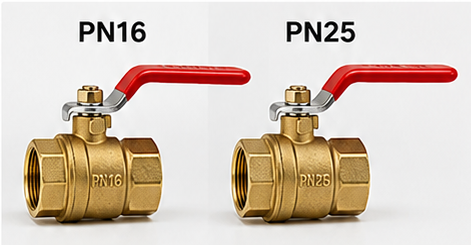
When buying brass ball valves, importers often see PN16 and PN25 marked on the valve body. What is the difference, and which pressure class is suitable for your market?
This guide explains the meaning, differences, applications and key purchasing factors to consider when selecting PN16 or PN25 brass ball valves.
It is written for importers, wholesalers, plumbing distributors, hardware stores and project buyers comparing products from different suppliers.
1. What Do PN16 and PN25 Mean?
PN is a nominal pressure designation used for valves, pipes, flanges and related pipeline components.
- PN16 is commonly associated with a nominal pressure class of 16 bar.
- PN25 is commonly associated with a nominal pressure class of 25 bar.
2. PN16 vs PN25 Brass Ball Valves
| Comparison Item | PN16 Brass Ball Valve | PN25 Brass Ball Valve |
|---|---|---|
| Nominal Pressure Class | PN16 | PN25 |
| Typical Application | General plumbing and water systems | Higher-pressure or heavier-duty applications |
| Valve Body | Standard or medium-duty design | May use a reinforced or heavier body design |
| Body Wall Thickness | Standard design specification | May be thicker depending on the model |
| Unit Weight | Often lower | Often higher, depending on construction |
| Purchase Cost | Usually more economical | Usually higher |
| Typical Market Position | Residential and general commercial use | Commercial, project and industrial distribution |
These are general purchasing differences. A PN25 marking alone does not prove that one valve is stronger than another. Buyers should also compare the technical drawing, unit weight, port diameter, material specification and pressure-test requirements.
3. Full Port vs Standard Port
Pressure class and port design are separate specifications. A PN25 valve is not automatically a full-port valve.
Full-Port Brass Ball Valve
The internal bore is close to the connected pipe diameter, helping reduce flow restriction and pressure loss when the valve is fully open.
- Higher flow capacity
- Lower flow resistance
- Suitable for water supply, HVAC and pump connections
Standard-Port Brass Ball Valve
The internal bore is smaller than the connected pipe diameter, offering a more compact and economical design where maximum flow is not required.
- More compact construction
- Lower material consumption
- Suitable for general shut-off applications
4. Typical Applications
PN16 Brass Ball Valves
- Residential water supply
- General plumbing systems
- Garden irrigation
- Building maintenance
- General HVAC pipelines
- Hardware and plumbing distribution
PN25 Brass Ball Valves
- Higher-pressure water systems
- Commercial plumbing installations
- Heating and HVAC systems
- Pump and equipment connections
- Industrial fluid-control systems
- Projects requiring a heavier-duty design
5. Key Factors When Choosing
Brass Material
Common material options may include HPb59-1, CW617N, DZR brass and lead-free brass. The required composition depends on the destination market, application and regulatory requirements.
BSP, BSPT and NPT Threads
The correct pressure class will not solve an installation problem if the thread is wrong. Buyers should confirm BSPP, BSPT or NPT before production. Read the detailed guide: BSP vs NPT Threads: What Brass Valve Buyers Should Know.
Working Pressure and Test Pressure
Nominal pressure, recommended working pressure, shell-test pressure and seat-test pressure are different technical values. A valve may be tested above its normal operating pressure, but this does not mean it should operate continuously at the test pressure.
Temperature and Working Medium
Operating temperature can affect brass-body strength, PTFE seat performance and stem sealing. Buyers should provide the working medium, minimum temperature, maximum temperature and expected pressure fluctuations before final product confirmation.
6. How to Compare Supplier Quotations
- Confirm the valve size and required quantity.
- Confirm PN16, PN25 or another required pressure class.
- Request the brass grade or chemical-composition requirement.
- Compare the net unit weight, excluding packaging.
- Confirm whether the valve is full port or standard port.
- Request the actual internal bore diameter.
- Compare the valve length, height and body dimensions.
- Confirm BSPP, BSPT or NPT threads.
- Check ball, stem, seat and sealing materials.
- Confirm shell-test and seat-test requirements.
- Confirm valve-body marking, logo and handle requirements.
- Compare inner boxes, cartons, pallets and OEM packaging.
7. Related Brass Ball Valve Products
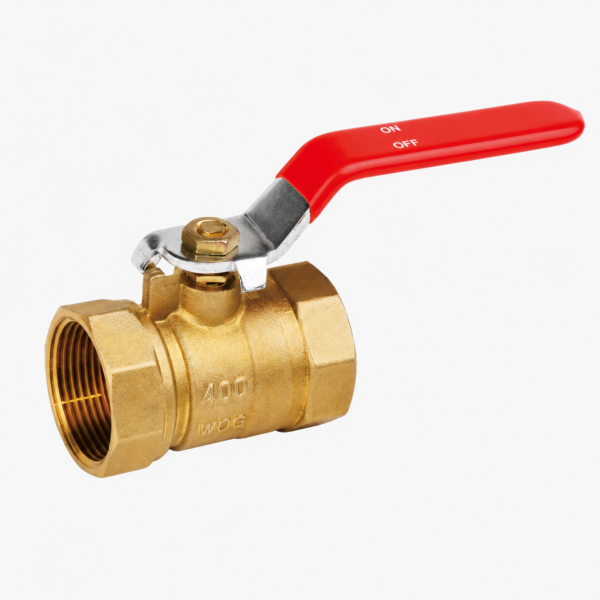
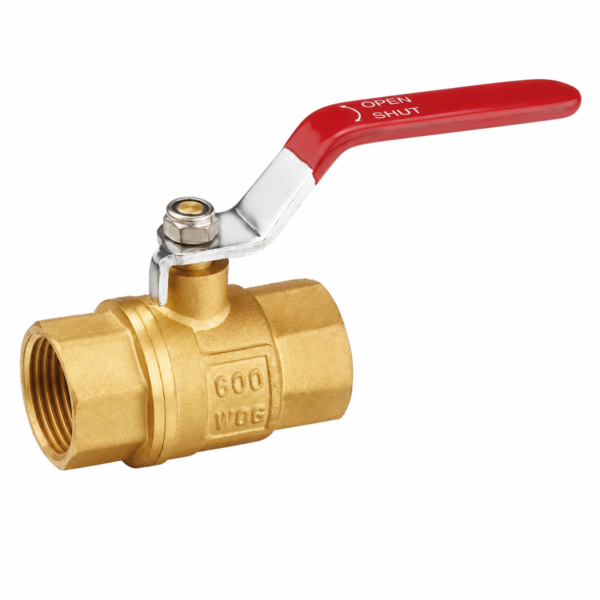
Important: PSI and PN are different pressure-designation systems. A PSI-marked valve should not be treated as an automatic replacement for a PN-class valve without checking the complete technical specification.
8. Frequently Asked Questions
What is the main difference between PN16 and PN25?
They belong to different nominal pressure classes. PN25 is generally considered for higher-pressure or heavier-duty applications, but actual suitability depends on the valve design, material, temperature, medium and test requirements.
Is a PN25 valve always heavier?
No. A PN25 valve is often heavier, but different manufacturers may use different body dimensions, brass grades, port sizes and internal structures.
Can a PN16 valve be used in a PN25 system?
It should not be used unless the system designer and valve manufacturer confirm that the valve is suitable for the actual operating conditions and project requirements.
Does PN25 automatically mean full port?
No. Pressure class and port design are separate specifications. Buyers should confirm the actual internal bore diameter.
Are PN16 and PN25 available with NPT threads?
Depending on the valve model, both pressure classes may be supplied with BSPP, BSPT or NPT threads. The required thread must be confirmed before production.
Can the pressure marking and logo be customized?
Valve-body markings can be customized, but the pressure marking should correspond to the actual product design and verified test performance.
Looking for PN16 or PN25 Brass Ball Valves?
Send the required sizes, thread type, quantity, pressure class and destination port for product confirmation and factory quotation.